Home › Asphalt Pathways, Sidewalks, and Trails
We build asphalt pathways and trails in New York, NY for parks, campuses, and commercial sites that need safe, accessible routes. Our team designs paths for walkers, joggers, bicycles, and maintenance vehicles while managing slopes and drainage. The finished surfaces are smooth, continuous, and easy to maintain across long distances.
Precision Asphalt New York provides professional asphalt pathway paving throughout New York, NY, New York and the surrounding area. Our licensed, insured crew delivers safe, clean, on-time work with a free estimate before anything begins. Call (332) 264-5090 or request your free quote.
Asphalt Pathways, Sidewalks, and Trails in New York, NY
In New York City, pathways, sidewalks, and trails take constant abuse from foot traffic, delivery carts, bikes, tree roots, and freeze-thaw cycles. Precision Asphalt New York focuses specifically on asphalt pathway paving that holds up in this environment and stays safe to walk on.
When we plan a pathway or sidewalk project, we look first at how it will actually be used. A school walkway in Manhattan has different needs than a jogging loop in a Hudson River park or an access path behind a commercial building in SoHo. We factor in expected traffic, drainage routes, nearby trees, and local code rules so you end up with asphalt that performs, not just looks good for a month.
We work across the five boroughs and surrounding areas from tight brownstone front walks to multi-block greenway segments. For each site, we check the subgrade, slope, and existing surfaces, then design the pavement structure to match conditions instead of forcing a one-size-fits-all section.
How Our Asphalt Pathway Paving Process Works
Every asphalt pathway, sidewalk, or trail project starts with a site walk. A Precision Asphalt New York foreman walks the full layout with you, marks utilities, notes drainage problems and trip hazards, and confirms access for equipment. In New York, tight access and limited staging space often control which machinery we bring and how we phase the job.
Next we prepare the base. We remove existing failed concrete or asphalt, sawcut edges for a clean joint, and excavate to the depth needed for a stable stone base. In older NYC sidewalks we often find layers of brick or cinder fill; we remove the unstable layers and compact the remaining soil. Then we install and compact crushed stone (commonly NYSDOT type 2 or equivalent) to reach proper grade and cross-slope for drainage.
Once the base is stable, we set forms or edge restraints where needed to control thickness and alignment. For curved park trails or plaza paths, we use flexible edging or hand shaping so the asphalt follows the exact layout. Only after the base passes density checks do we bring in hot mix asphalt from a local plant, timing delivery to current temperatures so the mix is workable but not cooling too fast in city traffic.
We place asphalt using small pavers where possible for a smooth mat, or by hand in tight courtyards and between buildings. Our crew rakes, levels, and then compacts the surface using a combination of vibratory rollers and plate compactors along edges. We pay close attention to transitions at building entrances, curb ramps, and tie-ins to existing concrete, since these are common trip points if not handled carefully.
Design Options for Paths, Sidewalks, and Trails
Asphalt pathways do not have to look like generic black strips. Precision Asphalt New York offers mix and layout options tailored to how the space is used.
For typical residential or light commercial sidewalks, we usually install a 2 to 3 inch surface course over a 4 to 6 inch compacted stone base. Where sanitation trucks or occasional vehicle loading might cross, we increase base depth and may add a binder course between the stone and surface layer to resist rutting.
For multi-use trails and park paths, we often recommend finer aggregate surface mixes for a smoother feel underfoot and for bikes. We can incorporate gentle curves, widenings at benches, and pull-outs at intersections. On waterfront or low-lying routes, we design cross-slope and longitudinal slope to move stormwater to inlets instead of leaving puddles that ice over in winter.
If you need visual separation without dealing with full colored asphalt, we can add sawcut joints, decorative borders using a slightly different mix, or alternate edge materials like concrete bands or steel edging. We also coordinate with lighting, fencing, and planting contractors so your pathway integrates cleanly with the rest of the site instead of being an afterthought.
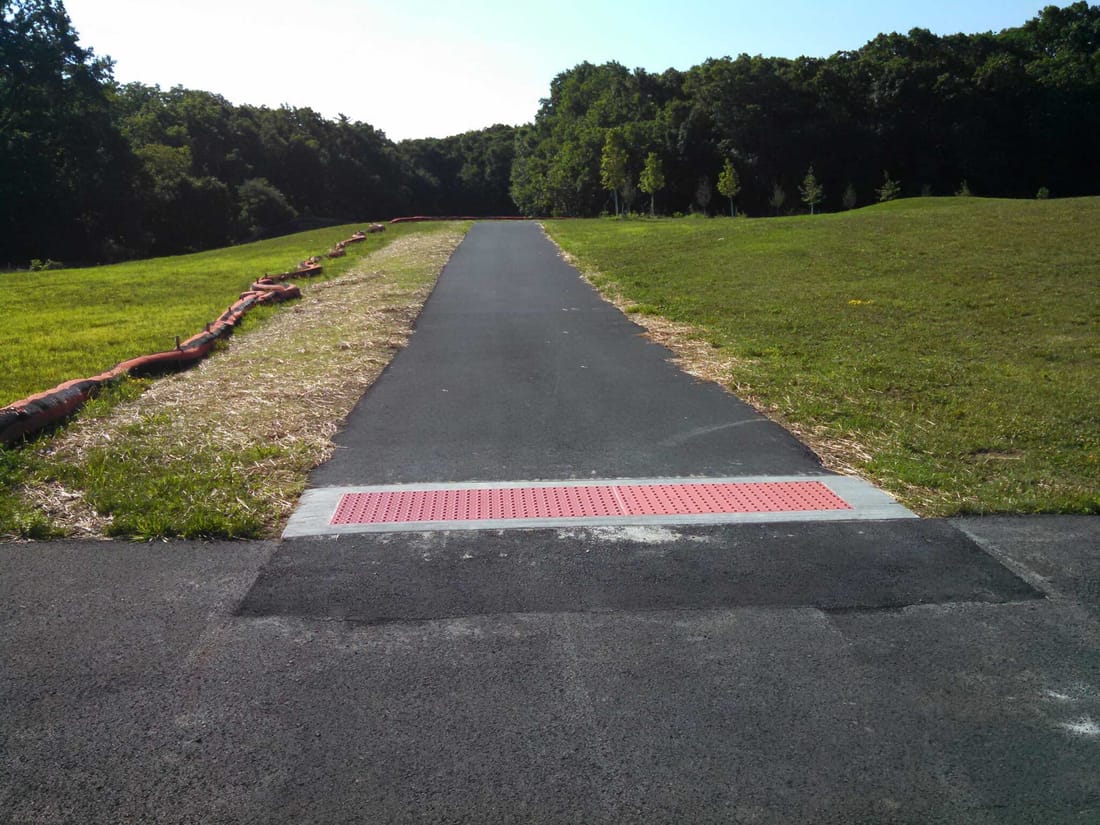
For compliance, we align sidewalk and trail grades with ADA guidelines wherever required, checking slopes and landings at entrances, ramps, and crossings. This is especially important on sloped streets in neighborhoods like Washington Heights, where hitting the right slopes takes careful planning before asphalt ever arrives on site.
What Drives Cost for Asphalt Pathway Paving in New York
Pathway and sidewalk projects in New York share some common cost drivers that are worth understanding before you ask for quotes. Precision Asphalt New York is transparent about these so you can compare bids fairly.
Access and logistics are a major factor. If we can stage close to the work and bring in small pavers and rollers directly, costs are lower. If the path runs through an interior courtyard, rooftop, or fenced park with narrow gates, we may need smaller equipment and more hand labor, which takes longer.
Existing conditions affect cost more than most people expect. Removing thick, reinforced concrete, hauling material from a basement-level yard, or dealing with buried debris and old tree roots adds time and disposal fees. On the other hand, resurfacing a relatively sound existing asphalt path with a thin overlay can be significantly more economical if the base is still stable.
Material thickness and mix type also matter. A simple light-use residential walkway with standard hot mix uses less asphalt and stone than a high-traffic park loop or commercial plaza path that needs a thicker structure. In cold climates like New York, we often recommend not cutting thickness too aggressively just to save money, since thin sections fail faster under freeze-thaw cycles.
Timing is another cost factor. The best paving window in NYC is typically April through early November, with fewer weather delays in late spring and early fall. Trying to squeeze in work during cold snaps or frequent rain can require more visits and result in lower-quality compaction, so we plan your schedule to balance speed, cost, and quality.
Common Problems and How We Prevent Them
Urban pathways and sidewalks tend to fail the same ways: cracking from poor base, heaving from tree roots, standing water from bad grading, and raveling where the surface breaks apart. Precision Asphalt New York designs each project around these specific issues rather than reacting later.
To control cracking and settlement, we take extra time on base prep. We undercut soft spots, add and compact stone in thin lifts, and refuse to pave over pumping or spongy areas just to finish faster. Where we tie into old concrete or patchwork asphalt, we sawcut clean, straight edges and step the joint to reduce reflective cracking.
Tree roots are a frequent problem in Brooklyn, Queens, and parts of the Bronx. We coordinate with arborists or Parks where required and adjust pathway alignment slightly when possible to avoid major roots. If roots are already lifting the surface, we may install root barriers or local base adjustments while protecting the tree where city rules require it.
For drainage, we shape both the stone base and the asphalt surface with consistent cross-slope toward drains, gutters, or planted areas. On long runs we avoid flat sections where water will sit. In some cases we cut in shallow swales or add small catch basins to keep water away from building foundations and entrances.
To keep surfaces from raveling or wearing quickly, we use the right mix for the traffic level and ensure proper compaction. Thin, poorly rolled overlays fail quickly under winter salting and snow shovels. Our crews make extra roller passes along edges and joints, since these are usually the first spots to deteriorate.
Planning Your Project With Precision Asphalt New York
Successful asphalt pathway paving in New York starts with clear planning. Before we price your job, we ask for basic information: location, approximate length and width, photos of existing conditions, and any known site constraints like limited access hours, school schedules, or building delivery times.
We then schedule a site visit to confirm measurements, discuss alignment, check drainage paths, and identify any code or ADA implications. For commercial and institutional clients, we can work from site plans or coordinate with your architect or engineer to match specified sections and details.
We also talk about how you want the space to function. Do you need a simple, durable sidewalk that can handle carts and dollies, or a smoother trail suitable for strollers, wheelchairs, and joggers. Are there specific points where you expect heavier traffic, such as building entrances or corner crossings, that may need extra thickness or more refined grading.
Once we agree on scope, we outline phasing to keep access open as much as possible. For example, on Manhattan sidewalks we may work in halves so pedestrians can still pass, or schedule night or weekend work for commercial entrances. The written proposal from Precision Asphalt New York will show base depths, asphalt thicknesses, and areas to be removed and replaced so you know exactly what you are buying before we arrive on site.