Home › Parking Lot Paving & Installation
Businesses in New York, NY rely on our asphalt parking lot paving to create safe, attractive areas for customers and staff. We design thickness and layout based on your traffic, then handle grading, base installation, and precise asphalt placement. From small retail lots to large commercial properties, we deliver smooth, well drained pavements ready for striping and long term use.
Precision Asphalt New York provides professional asphalt parking lot paving throughout New York, NY, New York and the surrounding area. Our licensed, insured crew delivers safe, clean, on-time work with a free estimate before anything begins. Call (332) 264-5090 or request your free quote.
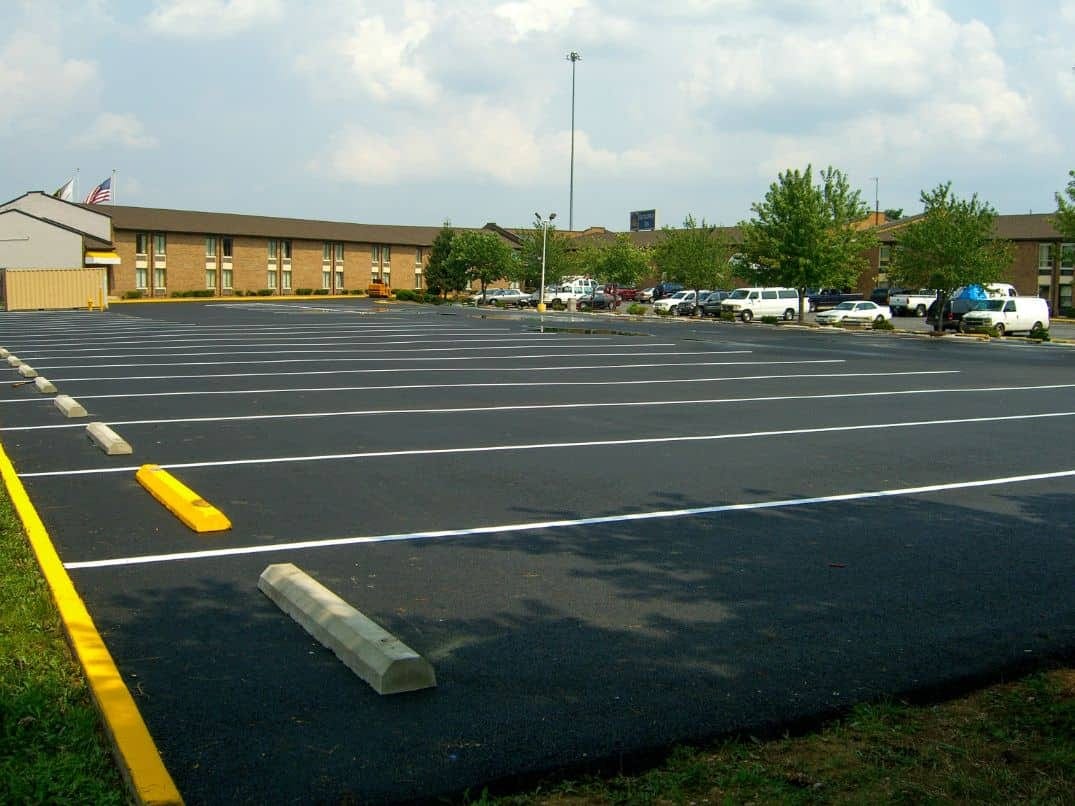
Asphalt Parking Lot Paving in New York, NY That Holds Up to City Traffic
A good parking lot in New York City is not just blacktop and lines. It has to handle delivery trucks on Mondays, snow piles in February, heavy rain running off the buildings, and constant turning traffic at the entrance. At Precision Asphalt New York, we design asphalt parking lot paving specifically for these local conditions, not for a suburban strip mall in another state.
Before we price or promise anything, we walk the property with you. We look at how cars actually move on and off the street, how close you are to neighboring buildings, where the water currently collects, and how tight the space is for trucks or emergency vehicles. For a lot in Manhattan or the outer boroughs, we also consider alley access, loading dock locations, and shared driveways.
We separate your lot into zones: traffic lanes, parking stalls, loading areas, and dumpster pads. Each area may need a different asphalt thickness and base support. For example, the entrance throat and delivery lane may get a thicker asphalt section or reinforced base, while standard parking stalls can use a lighter design. This approach usually costs less over the life of the lot than using one generic section everywhere and then constantly repairing the high stress areas.
How We Install a Long-Lasting Asphalt Parking Lot
Parking lot installation in New York starts with what is under the asphalt. If the base is wrong, the surface will crack, rut, or heave no matter how good the mix is. Precision Asphalt New York follows a clear step-by-step process so you understand what will happen on your site.
1) Site evaluation and plan: We check existing elevations, nearby building entrances, garage ramps, and curb heights. The plan sets slopes so water flows to catch basins or the street gutter without sending runoff onto neighboring properties or into your building entrance. We also plan staging for equipment and trucks, which is critical in tight city spaces.
2) Demolition and excavation: We mill or remove existing asphalt or concrete, then excavate to the design depth. In older New York lots, we often find buried construction debris or pockets of soft fill. When that happens, we remove the unstable material and replace it with compacted stone, and we will show you what we uncover so you know why we are making the change.
3) Subgrade preparation: The native soil is compacted and proof rolled. If the roller causes visible flexing or pumping, that area is stabilized, usually with additional stone base or, in very soft spots, a geotextile fabric between soil and stone. This step is what prevents those localized sinkholes that often appear a year after paving.
4) Aggregate base installation: We install and compact crushed stone in lifts, usually 4 to 8 inches total, depending on load requirements. In drive lanes and loading areas we often specify a thicker base. Every lift is compacted to a target density, not just “rolled a couple of times,” so the base does not settle under traffic.
5) Asphalt paving: We place asphalt with a self-propelled paver, not by hand raking large areas. Typical commercial lots receive a binder course (structural layer) and a surface course (wearing layer). For heavier traffic, we may use a 2.5 inch binder and 1.5 inch surface. For lighter use, we adjust accordingly. Joints are hot lapped when possible so you do not end up with weak, cold seams that crack early.
6) Compaction and finishing: Steel drum rollers complete compaction while the asphalt is still hot. We check for smooth transitions at sidewalks, garage entries, and the street edge so vehicles do not bottom out. Once cooled, we return for striping and, if appropriate for your use and budget, apply sealcoat after the pavement has cured for the recommended time.
Design Choices, Materials, and Options for NYC Parking Lots
Not every asphalt parking lot is built the same. At Precision Asphalt New York we walk you through real options, explain tradeoffs in simple terms, and help you pick what fits your property, traffic, and budget.
Mix designs: For New York, we typically use DOT-approved asphalt mixes so you get proven performance in freeze-thaw cycles and deicing salt exposure. For high-stress zones such as loading docks and tight turning areas, we may recommend a mix with higher stone content that resists rutting from repeated truck traffic.
Thickness and section: A small retail lot with mostly passenger cars might use a thinner section than a mixed-use building with frequent box truck deliveries. We design based on anticipated traffic, not guesswork. If you tell us that garbage trucks or oil delivery trucks come in weekly, we adjust the section so the pavement does not shove or tear at those turning points.
Drainage features: Many New York lots have minimal fall and are pinched between buildings. In those cases we may add or adjust catch basins, trench drains near garage doors, or paved swales that direct water away from entrances and elevator shafts. Poor drainage prematurely damages asphalt, so spending a bit on correct grading and inlets often saves major repair costs later.
Surface treatments and markings: You can choose standard blacktop or, in sensitive areas, a lighter sealcoat or striping plan to brighten the space. We plan stall widths for current vehicle sizes, ADA-compliant spaces with correct slopes, stop bars at exits, and pedestrian walkways where foot traffic is heavy. For mixed car and truck areas, we can mark dedicated truck routes to protect lighter pavement sections.
Edge conditions: In tight city lots, edges often meet brick walls, building columns, or old concrete slabs. We take time to form clean joints and transitions so water does not seep under those edges. Where needed, we cut and pin to existing concrete, or use sawcut keyways, rather than simply feathering new asphalt over old surfaces that will quickly break away.
What Affects Cost and Timeline for Asphalt Parking Lot Paving in New York
Two lots the same size can cost very different amounts in New York. Precision Asphalt New York is up front about the factors that move the needle on price and schedule so you can budget realistically and avoid surprises.
Site access and logistics: In a tight Manhattan location or a courtyard lot, getting trucks and equipment in and out can be the biggest challenge. If we have limited hours for deliveries or must pull material from smaller trucks due to weight or clearance limits, production slows and costs rise. We factor these logistics into our quote instead of surprising you halfway through.
Existing conditions: If the existing pavement is badly failed, with alligator cracking and standing water, there is usually base damage below. You can choose a “band aid” mill and overlay in some situations, but for long-term performance we often recommend removing and rebuilding the failed sections. We will price and explain both options and show you where it may make sense to invest more now to avoid constant patching.
Required thickness and base: Heavier traffic or poor native soils require thicker stone base and more asphalt. We design to handle your actual use so you are not paying for unnecessary thickness where it is not needed, but you are protected where loads are heavy.
Work hours and phasing: In New York, many properties cannot fully shut down. We often pave in phases, keeping part of the lot open at all times. Night or weekend work is possible at many sites but may incur extra costs for lighting, staffing, and coordination with neighbors. We lay out a phasing plan in advance, so your tenants, customers, or employees know exactly what to expect.
Season and weather: The prime season for asphalt parking lot paving in New York is typically late April through early November, depending on temperatures. Cold weather shortens the workable time for compaction, so projects may take longer or require more crew resources. Booking key projects early in the season helps you hit target dates and often improves pricing compared to last-minute fall work.
How Precision Asphalt New York Manages City Constraints, Permits, and Long-Term Care
Paving a parking lot in New York is not the same as paving in an open industrial park. There are city rules, neighbor concerns, and access challenges that can either be handled calmly or cause major headaches. Precision Asphalt New York focuses on planning, communication, and long-term performance.
Permits and coordination: For lots that tie into city streets or sidewalks, we coordinate with the appropriate agencies on curb cuts, sidewalk transitions, and any required street occupancy permits. If work affects shared driveways or common areas, we help you plan communication to neighboring owners and tenants so everyone knows when and how access will change.
Maintaining access: Few buildings in New York can close parking for days. We break work into logical sections, maintain emergency access, and schedule material deliveries to avoid peak traffic times around your building. Where needed, we set up temporary pedestrian paths and signage so people can safely reach entrances while paving is in progress.
Quality checks and warranties: During construction we check grades with laser levels, confirm compaction targets, and inspect joints and drainage paths before we leave. After the first heavy rain, you can call us to walk the lot together and verify that water is flowing as intended. If there are isolated low spots or issues, we address them rather than leaving you to live with puddles.
Long-term care plan: We give you a practical maintenance schedule based on your specific use, not a generic template. For a busy supermarket lot, that might mean earlier crack sealing and more frequent striping. For a small office lot, the focus might be on periodic crack filling and sealcoating to extend life. We also discuss snow plowing practices, such as using proper blade shoes and avoiding piles on the same edge year after year to reduce damage.
If you are planning a new asphalt parking lot or a full replacement in New York, NY, the most useful next step is a site visit. Precision Asphalt New York will walk the property with you, explain your options in plain language, and give you a clear written plan that fits your building, traffic, and budget.