Home › Road, Street, and Municipal Paving
We deliver reliable road paving in New York, NY for municipal streets, subdivisions, and private roadway projects. Our crews handle grading, base work, asphalt placement, and compaction to meet strict specifications. From resurfacing neighborhood streets to building new access roads, we focus on smooth ride quality, drainage control, and long term durability.
Precision Asphalt New York provides professional road paving throughout New York, NY, New York and the surrounding area. Our licensed, insured crew delivers safe, clean, on-time work with a free estimate before anything begins. Call (332) 264-5090 or request your free quote.
Road, Street, and Municipal Paving in New York, NY
Precision Asphalt New York focuses on road paving that holds up to New York City traffic, weather swings, and constant utility work. Our work covers everything from short local streets and alleys to multi‑lane municipal roads.
In this city, a road is only as good as what is under the blacktop. Our crews start by evaluating base conditions, drainage patterns, and how the street is actually used. A low traffic residential block in the East Village needs a different asphalt mix and thickness than a bus route in Midtown or a service road near a warehouse district. We design each cross section to match real‑world loads and the expected abuse from trucks, plows, and frequent patching.
We coordinate closely with local agencies and property owners, especially on shared or boundary streets. That includes aligning with DOT standards, utility providers, and neighborhood access needs so your project does not turn into a tangle of change orders and delays. The goal is straightforward: a safer, smoother road that lasts as long as possible between major resurfacing cycles.
How the Road Paving Process Actually Works
On a typical New York City road, street, or municipal paving project, Precision Asphalt New York follows a clear sequence so nothing important gets skipped.
1) Site and base evaluation: We inspect the existing surface for alligator cracking, rutting, heaving at manholes, and repeated patch areas. We core or probe where needed to learn how thick the existing asphalt and base really are, and whether there is a stable stone base or just compacted fill. We also check slopes and where water actually flows during storms.
2) Milling and profiling: Most city roads are milled rather than stripped completely. We use milling machines sized to the street width to remove a controlled depth, often 1.5 to 3 inches, and to correct profile problems. The aim is to restore proper crown to the center and positive pitch toward drains without creating high lips at driveways or intersections.
3) Base repair and leveling: Where milling exposes soft spots, we undercut and rebuild the base with compacted aggregate. In older streets, we commonly find voids around old utility trenches; we cut these out in defined rectangles and rebuild them so they do not telegraph back as dips in a year or two. We may add a leveling course of asphalt to smooth irregularities before the final wearing course.
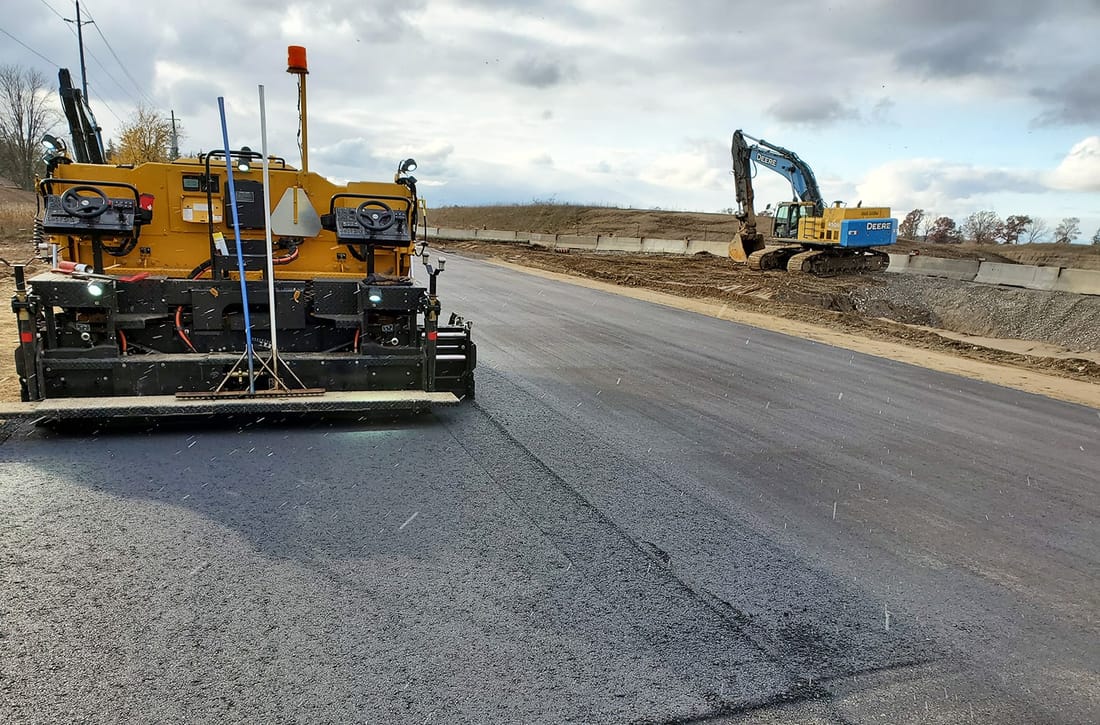
4) Asphalt paving: We select the mix design based on projected traffic and agency spec. Residential or light use streets might get a smaller aggregate top course, while truck routes or bus lanes get a heavier duty mix with a thicker lift. We use pavers to place the asphalt with consistent thickness, then compact it in a specific rolling pattern while it is at the right temperature. Proper compaction is what delivers real life span.
5) Joints, transitions, and structures: We treat joints where new asphalt meets old with tack coat and clean vertical cuts so the seam is tight and less likely to open. Around manholes, valves, and drainage inlets, we reset or adjust the structures to final grade so there are no raised or sunken rings that become hazards.
6) Final checks and striping: Once compacted and cooled, we verify smoothness and drainage, then apply pavement markings, crosswalks, arrows, and legends according to plan. For municipal work we match the required line types, widths, and materials so they comply with local standards.
Materials, Mix Designs, and Options for NYC Roads
Not all asphalt is the same, and the wrong choice shows up quickly in New York conditions. Precision Asphalt New York works with mix designs that are proven for local freeze‑thaw cycles, salt exposure, and heavy traffic.
We typically use hot mix asphalt with a surface course designed to resist rutting from buses and trucks, while still providing good skid resistance when wet or slushy. Aggregate size, binder content, and air voids are chosen so the surface does not polish too quickly under traffic. On bus routes or sharp turning areas, we may specify a stiffer binder or a more rut‑resistant gradation.
For high visibility municipal streets, we consider how the surface will interact with markings and crosswalks. A denser, more uniform surface texture holds thermoplastic striping better and helps maintain contrast under grime and salt. In some locations, the city may specify specialized surface treatments such as colored bus lanes or bike lane coatings. We coordinate paving operations so those specialty applications bond properly.
In areas with chronic ponding, particularly near the East River or low‑lying cross streets, we may adjust the section to improve drainage. That can include increasing the cross slope slightly within spec, or using a leveling course to remove dips before the final lift. While porous asphalt is rarely used on typical city roads because of subgrade and maintenance realities, we can integrate improved drainage structures and base materials where it makes sense.
If your street ties into older concrete sections, bridge decks, or cobblestone, we choose transition details that keep the surface uniform and avoid bumps at the change in material. That might include fabric or membrane at joints, modified tack coats, or extra attention to saw cuts and step joints so movement does not crack the new asphalt at the interface.
What Affects Cost for Road, Street, and Municipal Paving
Road paving budgets in New York, NY vary widely, mostly based on conditions you cannot see from the surface. Precision Asphalt New York is straightforward about what drives price so you can plan realistically.
Existing base condition: If the underlying base is stable and drainage is acceptable, milling and overlay is usually the most cost effective approach. If we find widespread base failure, utilities set at inconsistent depths, or trapped water in the subgrade, the project will need more extensive removal and reconstruction, which adds labor, material, and time.
Depth and area: Thickness of the new asphalt layers and the total square yardage are direct cost drivers. Municipal bus routes, truck corridors, and industrial access roads often require thicker sections and stronger mixes than quiet side streets, which increases both asphalt volume and compaction time.
Traffic management: In New York, work windows, lane closure restrictions, and required police or traffic control support can sometimes cost as much as the physical paving. Night work, staged construction, and detours around schools or hospitals add planning and manpower that must be built into the budget.
Structures and detail work: Resetting or adjusting a high number of manholes, catch basins, and utility boxes increases cost because each structure is essentially a small custom job. Intricate intersections, complex crosswalk layouts, or specialty markings also add time.
Access and staging: Dense neighborhoods, tight one‑way streets, and limited staging space for trucks and equipment can reduce production rates. This means more working hours for the same linear distance compared with open suburban roads. We account for this when we estimate, so there are fewer surprises during construction.
Common Road Problems in New York and How We Address Them
New York roads fail in patterns that are different from what you see in smaller cities. Precision Asphalt New York has built its methods around the specific problems caused by heavy use, utility work, and harsh winters.
Trench settlements and patchwork: Constant utility cuts leave a checkerboard of patches that often settle or crack. When we pave a street, we do not simply cover those scars. We identify poorly compacted trenches and cut them out as defined repair areas, rebuild the base, and tie them back into the surrounding structure so the surface does not sink along those lines again.
Alligator cracking and rutting: Heavy bus traffic and standing loads at intersections turn weak asphalt into a network of small cracks or ruts in the wheel paths. We address this by removing failed material deep enough to eliminate the structural problem, not just raking in new blacktop at the surface. We then use mixes and thicknesses matched to the load. At approaches to stop signs and traffic lights, we sometimes thicken the section selectively where vehicles brake hardest.
Ponding and freeze‑thaw damage: Even small puddles become potholes after a winter of freeze and thaw. During milling and leveling, we change the profile to move water to inlets, and we plane or fill low spots that act as birdbaths. We check the street after the first base course is down, before the final lift, to confirm water is moving as designed.
Manhole heaves and drops: Raised or sunken utility structures are a major complaint for drivers and cyclists. We coordinate with utilities and agencies to reset frames and covers to final grade. Around each structure, we build a reinforced ring of compacted base and properly compacted asphalt so seasonal movement does not quickly create a bump or depression.
Edge breakdown and curb issues: On narrow streets and parking lanes, truck tires often ride near the gutter. We address crumbling edges by rebuilding the gutter region and tying the asphalt tightly into existing or new concrete curbs. This prevents the edge from unraveling and creating a ragged, unsafe transition for bikes and parked cars.
Why Work With Precision Asphalt New York for Municipal and Street Paving
A successful road paving project in New York, NY is less about pouring tons of asphalt and more about managing constraints. Precision Asphalt New York is built around that reality.
We understand the permitting, inspections, and coordination required for street and municipal work in the city. Our team works within DOT and agency standards, manages staging and traffic plans, and sequences operations so access is maintained for residents, deliveries, and emergency vehicles.
Because we work locally, we know which blocks tend to flood in a heavy storm, where bus lines create extreme loading, and which neighborhoods demand minimal disruption at specific hours. We plan around school schedules, local events, and high‑volume business hours, so the paving process is as controlled and predictable as possible.
Our crews and supervisors are used to tight sites, aggressive schedules, and the need to get it right the first time. We own and maintain the milling machines, pavers, rollers, and trucks required for city work, so we are not waiting on out‑of‑town equipment or unfamiliar subcontractors.
When you talk with us about a road, street, or municipal paving project, we will walk the site, examine the failures you are seeing, and give you a clear explanation of options, tradeoffs, and probable lifespan for each approach. That way you can match your paving plan to your budget and performance needs, rather than guessing and hoping it lasts.