Home › Gravel-to-Asphalt Conversions
Turn your dusty, muddy gravel drive in New York, NY into a clean, smooth asphalt driveway with our conversion services. We evaluate the existing base, add stone where needed, and compact everything before paving. The result is a low maintenance surface that reduces tracking, improves drainage, and makes access to your home more comfortable year round.
Precision Asphalt New York provides professional gravel to asphalt driveway throughout New York, NY, New York and the surrounding area. Our licensed, insured crew delivers safe, clean, on-time work with a free estimate before anything begins. Call (332) 264-5090 or request your free quote.
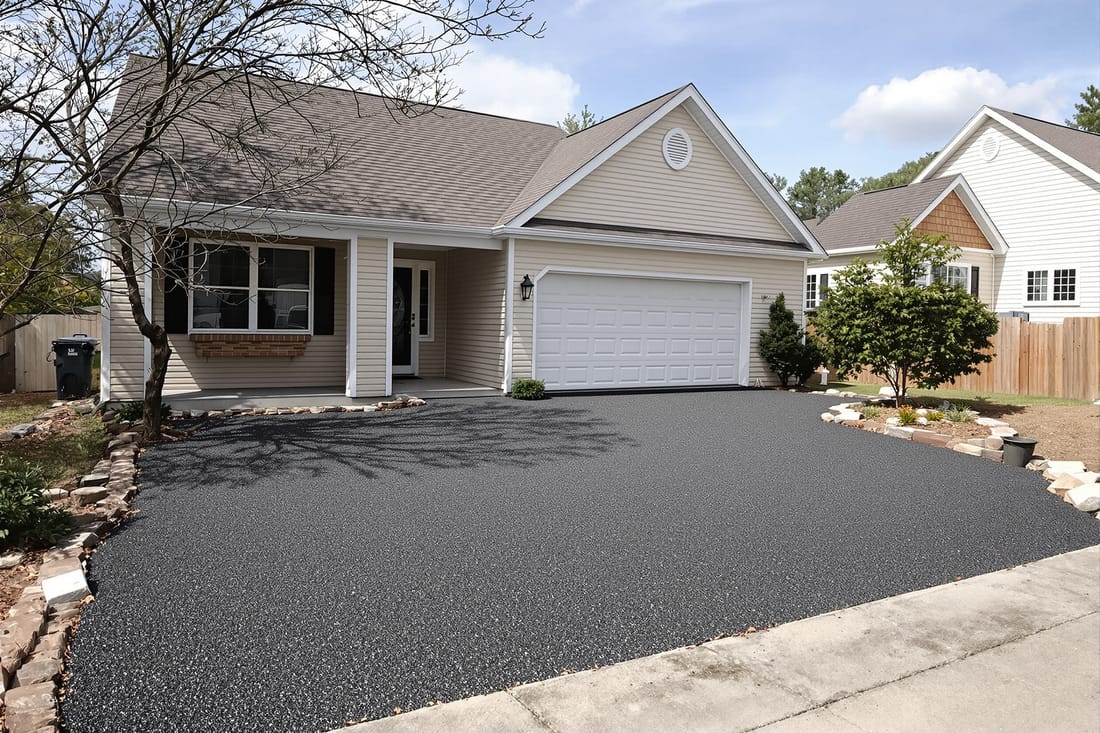
Turn a Dusty Gravel Driveway Into Clean, Solid Asphalt
If you are tired of tracking gravel into the house, ruts after every rain, and plows pushing stones all over the lawn, converting a gravel driveway to asphalt is usually the cleanest long-term fix. Precision Asphalt New York focuses on these conversions in New York City and the surrounding boroughs, so we know how to build a driveway that holds up to tight parking, delivery trucks, and NYC winters.
A gravel to asphalt driveway conversion is not just spreading blacktop over stone. If the base under your gravel is not solid and shaped correctly, the new asphalt will crack, sink, or puddle. We start every project by evaluating what is under your existing gravel, how water drains, and what type of traffic your driveway actually sees, from small cars to service vans and box trucks.
In New York, NY many homes and small buildings sit on narrow lots or share access lanes. That means we also look at exact property lines, tight turning space, city code issues, and how plows and trash trucks currently move in and out. Our goal is to turn a messy gravel approach into a smooth, easy-to-maintain paved surface that works with the way you really use your property, not just how it looks in a photo.
How We Actually Convert Your Gravel Driveway To Asphalt
A proper gravel to asphalt driveway conversion happens in stages. Precision Asphalt New York starts by stripping off loose, contaminated gravel. In many older driveways we find soft spots, old cinders, broken brick, or organic material below the surface. These all have to be removed or compacted correctly, or the asphalt will fail in those spots.
Once we expose the subgrade (the soil layer), we regrade it for slope and compaction. In New York City, we pay close attention to where water will go. Driveways must pitch away from buildings and toward a legal discharge point, such as the street gutter or a storm inlet. If your current gravel drive washes out toward a neighbor or into your basement steps, this is where we correct that.
After the subgrade is set, we install a new aggregate base if needed. For most residential driveways we use 4 to 6 inches of compacted crushed stone. For lanes that see box trucks or regular deliveries, we may recommend 6 to 8 inches. We compact in thin lifts with vibratory rollers or plate compactors, not just one pass on the top, so the base locks up firm.
On top of the base we place the asphalt. A typical residential gravel to asphalt driveway in New York, NY uses a 2 to 3 inch compacted asphalt layer. For heavier use, we might install a binder course first, then a finer top course. We machine lay when access allows, and hand rake and compact tight spots by hand. Edges are carefully shaped so water cannot creep under and start breaking down the sides.
Design Choices, Asphalt Mixes, And Drainage Details
Not every gravel to asphalt driveway has to look the same. Precision Asphalt New York helps you pick details that match your use and budget.
For light duty residential use, we typically recommend a single-course asphalt with a fine surface mix that gives a tighter, smoother finish. For shared driveways, small parking lots behind buildings, or any place a delivery truck or oil truck will drive, we often suggest a two-course system with a stronger binder layer under a smoother surface. This costs more up front, but in city use it usually extends life and reduces patching.
Color is essentially one choice, black, but texture, joints, and edge treatments are not. We can finish the edges straight and tight for a modern look, or shape a slight shoulder where the asphalt meets lawn or planting beds. In some New York, NY neighborhoods, owners prefer concrete bands at the sidewalk or at the garage door. We can coordinate those transitions so the new asphalt ties into city sidewalks or existing slabs without trip edges.
Drainage details are often what separate a good job from a constant headache. Many older gravel driveways simply shed water in all directions. When we convert to asphalt we can add a slight center crown, introduce shallow swales, or install channel drains and catch basins where runoff would otherwise hit a foundation or flood a low spot. In tighter urban backyards, running water to a small drywell may be the cleanest fix. We design these details around what is allowed locally and how your particular site behaves in a heavy summer storm or a fast snow melt.
What Affects Cost For A Gravel To Asphalt Driveway In New York, NY
Homeowners often ask for a price per square foot, but on a gravel to asphalt driveway conversion, the real cost drivers are what we cannot see at first glance. Precision Asphalt New York prices these projects after a site visit because the condition of your existing gravel and the underlying soil matters more than just the area.
Depth of base work is usually the biggest factor. If your current gravel drive already has a deep, well packed stone base with good drainage, we may only need minor corrections before paving. If we find soft clay pockets, organic fill, or constant wet areas, we may need to dig deeper and rebuild those sections. That adds labor, disposal, and new aggregate.
Access is another cost driver in New York, NY. A straight driveway where we can bring in machinery from the street and turn around is less expensive to build than a narrow rear lane tucked between buildings with overhead wires, limited truck access, or no place to stage material. Hand work, small machines, and extra trucking time show up in the price.
Other factors include thickness and type of asphalt, any additional drainage structures, and tie-in work at the sidewalk, curb cut, or garage slab. If your existing curb cut is too narrow or deteriorated, we may coordinate with you and, if needed, a mason to adjust it while we are on-site. During an estimate, we explain exactly which items are optional upgrades and which are required to get a sound, lasting driveway.
Timing, Weather, And How We Build For NYC Winters
New York weather is hard on driveways. Freeze and thaw cycles, salt from the street, and summer heat all affect how we plan a gravel to asphalt conversion. Precision Asphalt New York typically performs this work from spring through late fall, when daytime highs stay above about 50 degrees and nights are not dropping too low. This allows the asphalt to compact and cure properly.
On your schedule, we first pick a window with a stable forecast, ideally dry or with only light chances of rain. If a sudden storm appears on the radar, we may shift the paving day. We can often still perform base work and grading on slightly damp days, but we will not place asphalt in standing water or during steady rain. That discipline helps the driveway last.
During winter, we can evaluate and plan, but full conversions are limited by freezing ground and the risk of trapped moisture. If you have a problem gravel driveway that stays muddy through winter, we might do preliminary drainage improvements or stone reinforcement, then return in spring to pave.
After your new asphalt driveway is installed, we will walk you through care specific to New York, NY. That usually means keeping heavy turning traffic light for the first few days, avoiding parking heavy dumpsters or storage pods on fresh pavement without pads, and clearing snow with a plow blade slightly raised so it does not gouge the surface. With a solid base, correct drainage, and normal upkeep, a well built gravel to asphalt driveway in our climate should give you many years of clean, low-maintenance use.