Home › Walkway and Pathway Paving
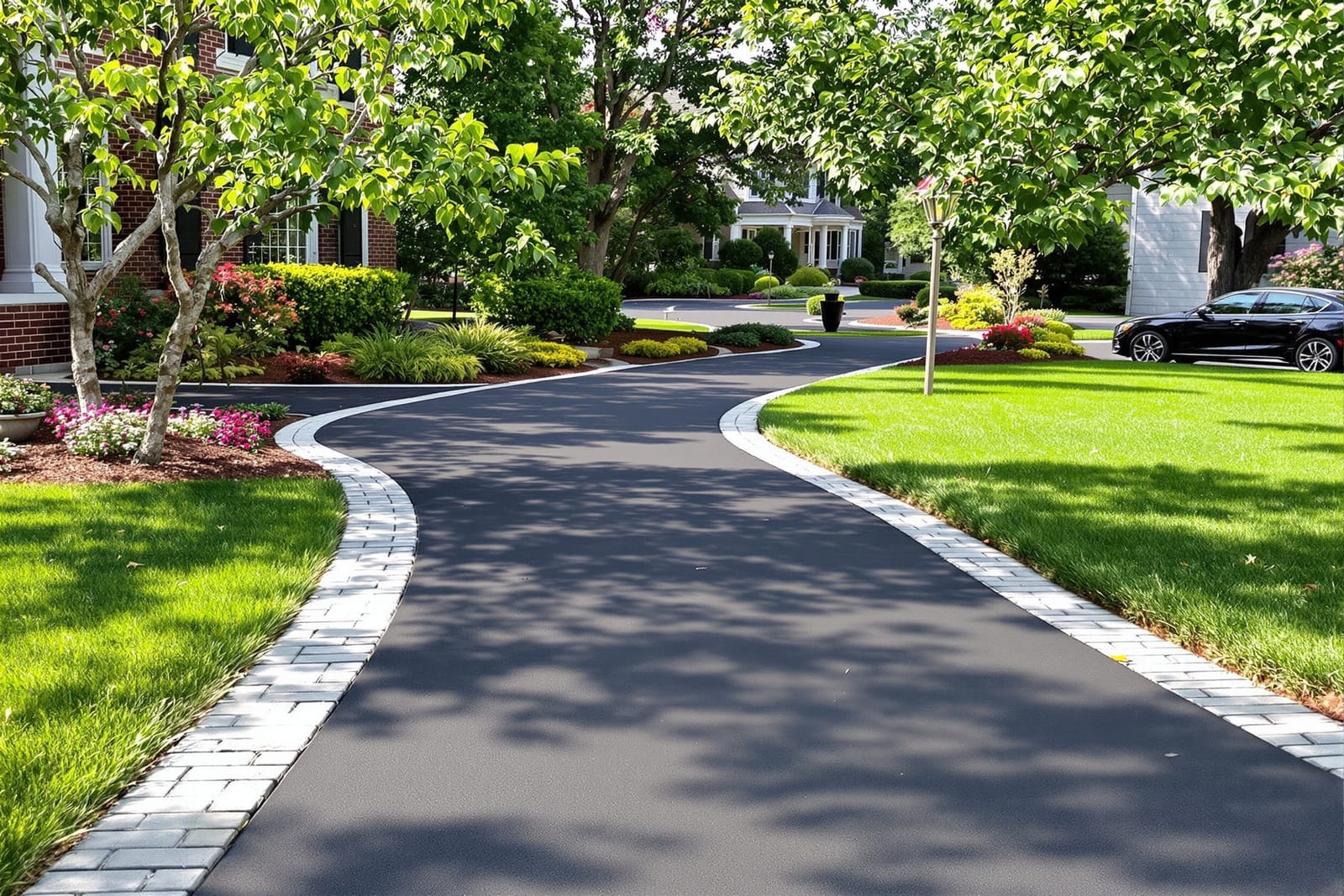
Our asphalt walkway paving in New York, NY creates smooth, safe paths around your home and shared outdoor spaces. We design and install walkways that blend with landscaping, improve accessibility, and drain properly. From garden paths to side yard walkways, every project is graded, compacted, and paved to deliver long lasting performance with a clean look.
Precision Asphalt New York provides professional asphalt walkway paving throughout New York, NY, New York and the surrounding area. Our licensed, insured crew delivers safe, clean, on-time work with a free estimate before anything begins. Call (332) 264-5090 or request your free quote.
Asphalt Walkways and Paths That Fit New York Properties
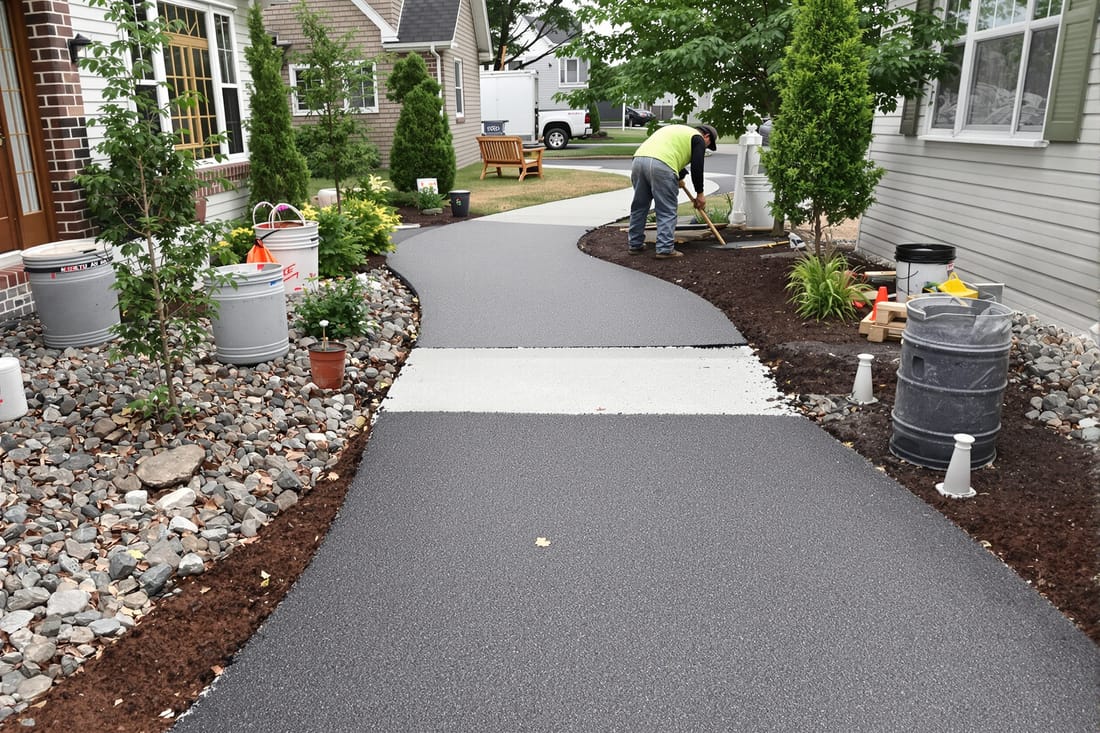
If you are looking at a worn concrete path, a muddy desire line across your lawn, or a cracked flagstone walk, asphalt walkway paving is a practical way to clean things up without spending brownstone money. Precision Asphalt New York focuses on small and mid-size paved paths across New York City, from narrow garden walks in Brooklyn to building approach paths in Midtown and schoolyard circulation routes in the Bronx.
Asphalt is flexible, which matters in New York’s freeze and thaw cycles. Where concrete slabs crack and heave, a properly built asphalt walkway will move a bit with the ground and is easier to repair in sections. That makes it a smart choice for front walks, side-yard access paths, around building perimeters, to and from parking areas, and along multi-family property lines.
We design walkways for how people really use a space. That might be a simple 3 foot straight path on a small townhouse lot, a 5 or 6 foot shared path to handle strollers and wheelchairs, or a curved garden route that connects a rear patio to a side exit. Precision Asphalt New York looks at roof drains, tree roots, garbage pickup locations, and snow shoveling patterns so the walkway we pave makes day-to-day life easier, not just nicer for photos.
How We Build a Durable Asphalt Walkway in New York
The quality of a walkway is decided long before the asphalt goes down. Our crew starts by marking out the exact path width and alignment, then calls in utility markouts through 811 for gas, electric, and telecom. In New York City, shallow utilities and old service lines are common, so we do not dig until we know what is under the surface.
We remove existing material with small skid steers or hand demolition, depending on access. In tight side yards or interior courtyards, we often load debris into carts instead of trucks to avoid damage to landscaping or steps. Old concrete is broken, removed, and hauled to a concrete recycler. Soft or organic soil is excavated until we reach firm subgrade, typically 6 to 10 inches below the planned finished surface for walkways that handle foot traffic only.
Next we install and compact a crushed stone base. For most asphalt walkway paving we use 3/4 inch crushed stone or a dense-graded aggregate, placed in layers and compacted with a vibratory plate compactor. The base is the difference between a walkway that lasts 2 years and one that lasts 15, so we check for soft pockets and correct them now.
We then set forms or edge restraints. On some residential walks we use steel or composite edging that sits slightly below the finished asphalt surface so snow shovels do not catch but the edge is still contained. For work along a driveway or parking lot we may key the walkway directly into existing asphalt.
Hot mix asphalt is brought in from a local plant and installed at a typical finished thickness of about 2 inches for pedestrian use. The crew rakes, grades, and compacts with a small roller or plate compactor, paying attention to slope so water drains away from buildings and does not pond on the path. On steep areas or where traction is a concern, we adjust the mix selection for better grip.
Design Options, Accessibility, and Local Rules
A walkway in New York has to work for tenants, visitors, delivery people, and often a building superintendent who will be pushing heavy carts. Precision Asphalt New York asks about real-world use before suggesting widths or layouts. Three feet is the minimum most people consider, but four feet is far more comfortable for passing, and wider is often needed at building entrances or where people queue.
We pay close attention to slope and cross-slope so that walks are comfortable and, where required, in line with ADA accessibility guidelines. When we are tying into a public sidewalk or curb ramp, we follow NYC Department of Transportation standards for sidewalk grades and transitions. On private property the city typically does not require formal permits for internal paths that do not affect the public sidewalk, but when any work reaches the property line or involves a curb cut we coordinate with DOT and, if needed, a licensed expeditor.
Lighting, visibility, and safety also enter into design. Dark asphalt can make an unlit side yard feel even darker, so we sometimes recommend contrasting edges or small concrete bands at key transitions, especially near stair landings. For multi-family and commercial properties, owners often ask for high visibility where the walkway meets a loading zone or parking area. We can add striping paint at those interfaces or small textured aprons for better footing in wet conditions.
Tree roots are another local reality. In older neighborhoods where sidewalks already show heaving from roots, we may recommend re-routing a planned asphalt path a few inches or a foot away from large trees, or using root barrier products along the edge. This costs less than repeated repairs and reduces the risk of trip hazards that can lead to liability claims.
What Drives Cost for Asphalt Walkway Paving in NYC
Two jobs with the same square footage can have very different costs, and most of that difference is in site conditions, not the asphalt itself. The first major factor is access. If the walkway is in a backyard of a rowhouse with no side alley, every pound of stone, asphalt, and debris has to go through the building or down a narrow path. That slows production and sometimes requires smaller equipment, which adds labor.
Existing conditions matter too. Removing a thin layer of surface material and placing asphalt over a solid base is inexpensive. Breaking and hauling thick reinforced concrete in a cramped courtyard is not. If the subgrade is wet, full of buried debris, or poorly compacted, we need more excavation and base stone, but that additional work prevents settlement and puddles later.
Thickness and mix design also play a role. Standard pedestrian walkways can usually be built with a single asphalt lift. Areas that will occasionally see light vehicles, such as service carts or maintenance trucks, often need thicker base stone and sometimes a second lift to avoid rutting. Using a more stable mix is a modest cost increase up front that avoids early deformation.
Finally, schedule and phasing can affect price. In rental buildings or busy commercial sites, we are often asked to keep access open. Precision Asphalt New York can phase the work in sections so tenants always have an open route, but each mobilization of crew and equipment has a cost. We explain these tradeoffs so owners can decide whether tighter scheduling or fewer mobilizations makes more sense for their situation.
Maintenance, Repairs, and Working Around New York Weather
A well built asphalt walkway in New York City should not be a constant maintenance headache. Routine care is mostly about keeping water and aggressive snow practices from beating it up. We recommend using plastic shovels or shovels with rounded blades, and avoiding hitting the surface with steel blades at steep angles. For de-icing, calcium chloride or magnesium chloride is kinder to asphalt than rock salt, and it helps protect nearby landscaping.
Over time, small surface cracks can appear from age and seasonal movement. These should be sealed before water works its way into the base. Precision Asphalt New York offers crack filling for hairline and minor cracks, and patching for localized failures such as spots where heavy equipment parked on a path that was only designed for foot traffic. Because asphalt is monolithic, we can cut and replace just the damaged area without replacing the entire walkway.
Drainage issues are one of the most common reasons we get called back to look at older paths we did not install. If you see regular puddles that last more than a day after rain, that spot will deteriorate faster. Solutions can range from milling and re-surfacing a short section to adjusting adjacent soil and adding small drains. Catching these early is cheaper than waiting for full depth failure.
New York’s weather and short paving season also matter. Hot mix asphalt requires temperatures that allow proper compaction and cooling. We avoid paving walkways during deep cold snaps or heavy rain because it shortens the life of the surface. For time-sensitive projects, we will help plan work during shoulder seasons and can sometimes use different mix designs that perform better in cooler conditions, within plant availability and local standards. Before each job we look at the forecast and coordinate with the owner so the timing supports a long lasting result.