Home › Parking Lot Sealcoating & Maintenance
Keep your commercial pavement in top shape in New York, NY with our parking lot sealcoating and maintenance services. We clean and crack seal the surface, then apply commercial grade sealer for protection and appearance. Scheduled maintenance slows aging, reduces repair costs, and keeps your property looking professional for customers and tenants.
Precision Asphalt New York provides professional parking lot sealcoating throughout New York, NY, New York and the surrounding area. Our licensed, insured crew delivers safe, clean, on-time work with a free estimate before anything begins. Call (332) 264-5090 or request your free quote.
Parking Lot Sealcoating in New York, NY That Actually Holds Up
If you own or manage a lot in New York City, you know how fast asphalt breaks down here. Delivery trucks, winter freeze-thaw cycles, salt, oil leaks, and constant traffic will dry out the surface and cause cracking. Precision Asphalt New York focuses on parking lot sealcoating that is built around real New York conditions, not generic manufacturer brochures.
Our crews work across Manhattan, the Bronx, Brooklyn, Queens, and Staten Island, so we see the same issues again and again: hairline cracks turning into ruts near loading zones, puddles forming at the low side of the lot, and accelerated wear at entrances where vehicles turn their wheels while stationary. When we plan your sealcoating, we look at how vehicles actually use your lot, the age and condition of the asphalt, and how often you can reasonably shut down sections for work.
Parking lot sealcoating is not paint and it is not cosmetic. It is a protective coating made from refined asphalt binders, water, and mineral fillers that seals the surface against water and chemicals and restores flexibility at the top layer. Applied correctly and on a sensible schedule, it slows down oxidation and cracking so you postpone expensive milling and repaving.
Our Parking Lot Sealcoating Process, Step by Step
Precision Asphalt New York follows a consistent process on every parking lot sealcoating project in New York, NY, adjusted for your specific site and traffic patterns.
1. Site walk-through and planning. We walk the entire lot with you, note drainage issues, existing cracks, soft spots, and high-wear areas such as entrances, dumpster pads, and loading docks. We also map out how to phase the job so tenants, customers, or staff can still access the property.
2. Surface cleaning. We machine sweep the lot and use steel wire brooms or power brooms at the edges and around structures. Oil spots are treated with an oil spot primer so the sealer can bond. If the surface still has fine dust, we use high-pressure blowers. Sealcoat that goes over dirt or loose stone will fail quickly, so prep matters.
3. Crack filling and patching. Structural problems are not solved by sealcoat. We hot-apply rubberized crack filler in expansion and shrinkage cracks, usually anything wider than 1/8 inch. Alligator areas, potholes, or depressions are cut out and patched with hot asphalt or cold patch depending on size and access. In high-traffic sections like garage entrances or truck lanes, we often recommend a skin patch or small overlay instead of just sealcoat.
4. Edge work and detail protection. We tape or shield concrete curbs, drains, utility covers, and building interfaces as needed. This is important in Manhattan and dense areas where aesthetics matter and property lines are tight.
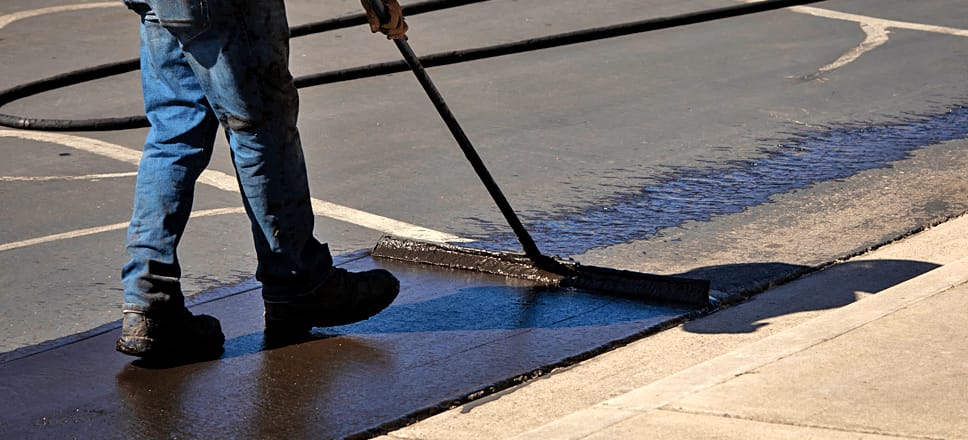
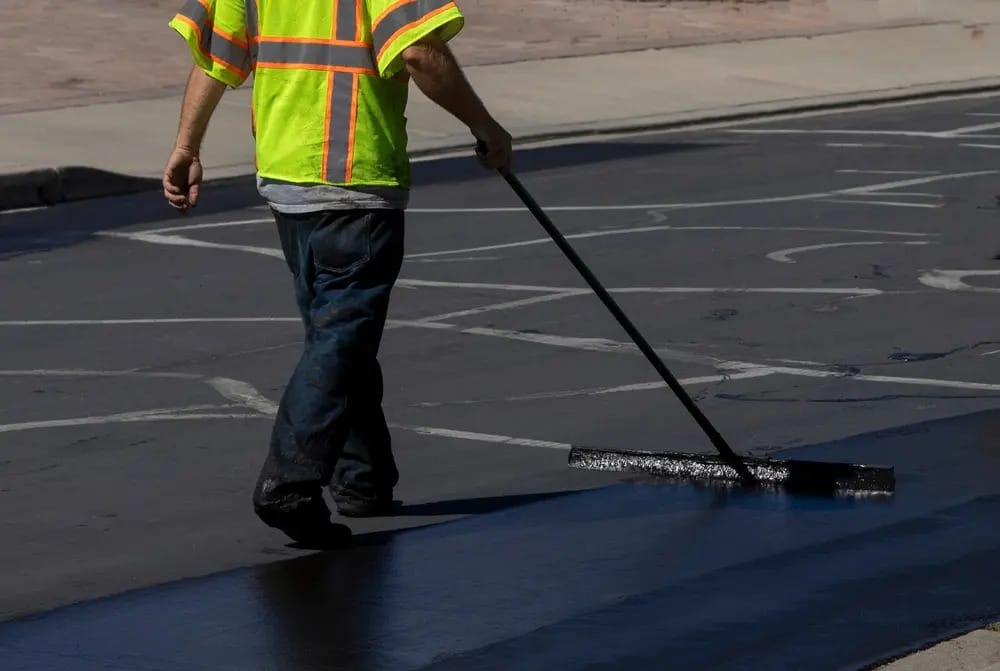
5. Sealcoat application. We typically apply two coats of commercial-grade asphalt sealer, either coal tar or asphalt-based, depending on environmental rules and property preference. Application is by squeegee, spray, or a combination. On rough or porous surfaces, we often squeegee the first coat to work the material into the voids, then spray a second coat for a uniform finish. Mix design is adjusted for the lot, for example more sand for higher traction on steeper ramps.
6. Curing and reopening. Under typical New York summer conditions, light traffic can return in about 24 hours and heavy traffic in 36 to 48 hours. In cooler or shaded areas, we may recommend longer. We post clear barricades and signage and can phase work in sections so your business remains open.
7. Re-striping and markings. Once the sealcoat is cured, we restripe stalls, ADA spaces, directional arrows, loading zones, and fire lanes with DOT-compliant traffic paint. This is the point where we can tighten up layout, add or resize spaces, or improve traffic flow if needed.
Materials, Options, and What Drives Cost
There are real choices to make with parking lot sealcoating, and they affect both performance and price. Precision Asphalt New York explains these options upfront so you know what you are paying for.
Sealer type. We typically work with two categories in New York, NY: refined tar-based sealer and asphalt emulsion sealer. Tar-based sealer has strong resistance to petroleum and chemicals, which is useful around gas stations or heavily trafficked retail lots. Asphalt emulsion is lower odor and often preferred in residential or mixed-use settings. Costs differ slightly, but the bigger factor is which product matches your site exposure and local regulations.
Additive packages. To perform well in NYC, sealers often need specialty additives, such as sand for traction, hardening agents to reduce tracking in hot weather, or polymer modifiers for flexibility. These add cost, but they address specific problems like wheel tracking at tight turns, or scuffing from delivery trucks.
Surface condition. A relatively smooth, sound lot with minor cracking will require less material and labor. A heavily oxidized, raveling surface needs more crack filling, possibly patching, and heavier application rates. In some cases we recommend a limited milling and resurfacing in certain sections instead of trying to “save” badly failed asphalt with sealcoat.
Access and phasing. In dense parts of New York, NY, like midtown or downtown, the logistics of staging equipment, closing sections, and working around delivery windows can be the main cost driver. Night or weekend work, multi-phase closures, and garage access coordination add crew time but reduce disruption for tenants and customers.
Lot size and layout. Large open lots are efficient to seal. Small, chopped-up lots, multi-level garages, or areas with many islands, bollards, and tight turns are more labor intensive. We account for these conditions in the proposal so you do not get hit with surprise change orders later.
When you request a quote from Precision Asphalt New York, you will see material type, number of coats, crack filling scope, striping, and any patching listed separately, so it is clear what impacts cost and where you might adjust scope to fit a budget.
Common New York Parking Lot Problems and How We Address Them
Parking lots in New York, NY tend to fail in predictable ways, usually tied to drainage, traffic, and winter weather. Precision Asphalt New York designs each sealcoating and maintenance plan around these local patterns.
Ponding and birdbaths. Older lots often settle near catch basins or at the low side of the property. Standing water is the enemy of asphalt. Before sealcoating, we assess these depressions. Minor ones can sometimes be corrected with a leveling course or patch lift prior to sealing. Severe drainage problems may need milling and regrading in localized areas. We do not hide water issues under sealer, because that guarantees premature failure.
Salt and winter damage. NYC winter maintenance usually means heavy road salt and constant plowing. This accelerates surface wear and opens up micro-cracks. We recommend a tighter sealcoating cycle in these conditions, often every 2 to 3 years for high-traffic commercial lots, with crack sealing as needed in between.
Oil and fuel spots. In front of garages, loading docks, and parking for older vehicles, oil saturation can be significant. Regular sealcoat will not stick to heavily contaminated areas. We mechanically remove loose material, treat with degreasers and primer, and if the asphalt is structurally compromised, replace that section. This targets the real problem instead of letting it spread.
Heavy truck routes. Supermarket deliveries, moving vans, and garbage trucks will chew up a light-duty parking lot, especially at turning points and in tight internal drive lanes. For those areas we often specify more aggressive patching, thicker sealcoat application, and a more frequent crack-sealing schedule, while treating standard parking bays more lightly. This targeted approach aligns cost and protection with how each part of the lot is actually used.
City constraints. In parts of New York, NY with limited on-street parking, we are careful about phasing so you do not lose all your tenant or customer parking at once. We often stage sealcoating over two or three nights, or split the lot in half so half remains active while the other cures.
Ongoing Parking Lot Maintenance Plans
Sealcoating is one part of a larger maintenance picture. Precision Asphalt New York offers simple, realistic maintenance plans so you can extend the life of your parking lot without constant emergency repairs.
Routine inspections. For commercial properties, we usually recommend a visual inspection at least once a year, ideally after winter. We look for new cracking, open joints, raveling, or settlement around drains, manholes, and utility cuts. Early intervention with crack sealing and small patches keeps water from getting deep into the base.
Crack sealing schedule. In New York weather, cracks widen and close seasonally. Our approach is to seal active cracking before it reaches a quarter inch or more. For many lots, this means crack sealing every 1 to 2 years, with full sealcoat every 3 to 5 years depending on traffic.
Snow and ice practices. We advise property managers to avoid metal blades digging into the asphalt. Rubber-tipped plows and setting blade height slightly above the surface help prevent gouging. We can also recommend de-icing products that are less aggressive than standard rock salt while still practical for NYC.
Line marking upkeep. Faded striping is both a safety issue and a liability concern. When we sealcoat and restripe, we can set a simple schedule to refresh key markings like stop bars, crosswalks, and ADA symbols between major sealcoat cycles. Many clients tie this to other scheduled property work so it is predictable.
Budget planning. Instead of reacting to potholes each spring, we can lay out a 5 to 7 year plan that includes sealcoating, crack sealing, and targeted repairs. This lets you budget realistically and avoid surprise capital expenses from early pavement failure.
What New York, NY Property Owners Should Check Before Hiring
If you are comparing parking lot sealcoating contractors in New York, NY, focus on how they plan and specify the work, not just the price per square foot. Precision Asphalt New York encourages you to ask the same questions of us and any other company you consider.
Ask for the exact sealer product and mix design. You should know whether they are using asphalt emulsion or refined tar sealer, what sand load they include, and whether any additives are used. Low solid content or excessive water dilution translates directly into shorter life.
Confirm surface prep and crack repair details. Many low bids assume minimal or no crack filling, no oil priming, and only light blowing and sweeping. That produces a nice color at first but fails quickly. Make sure the scope clearly states how cracks are treated, how many linear feet are included, and how potholes or alligatored areas are handled.
Review traffic control and scheduling. In NYC, coordination is half the job. Your contractor should present a basic phasing plan, access routes for emergency vehicles, and timing for reopening. For mixed-use buildings or retail centers, night or weekend work may be essential, and that should be built into the proposal.
Check insurance and references for similar properties. Look for experience with lots that match yours in size and use, for example a small co-op parking area in upper Manhattan versus a large supermarket lot in Queens. Precision Asphalt New York can provide local references for both types.
Understand the maintenance recommendations after the work. A responsible contractor will explain how often you should re-seal, what type of snow removal and cleaning practices to follow, and what signs of trouble to watch for. If you hear “just call us again in a few years” without specifics, that is a red flag.
When you work with Precision Asphalt New York, you get clear documentation of materials, methods, and maintenance expectations so you know exactly how your parking lot sealcoating investment should perform over time.