Home › Industrial and Heavy-Duty Asphalt Paving
Our industrial asphalt paving in New York, NY is designed to handle heavy trucks, forklifts, and constant traffic. We engineer thicker sections, reinforced bases, and specialized mixes for loading docks, truck courts, and warehouse access. The result is a tough surface that resists rutting, shoving, and premature failure in demanding industrial environments.
Precision Asphalt New York provides professional industrial asphalt paving throughout New York, NY, New York and the surrounding area. Our licensed, insured crew delivers safe, clean, on-time work with a free estimate before anything begins. Call (332) 264-5090 or request your free quote.
Industrial Asphalt Paving for New York Facilities
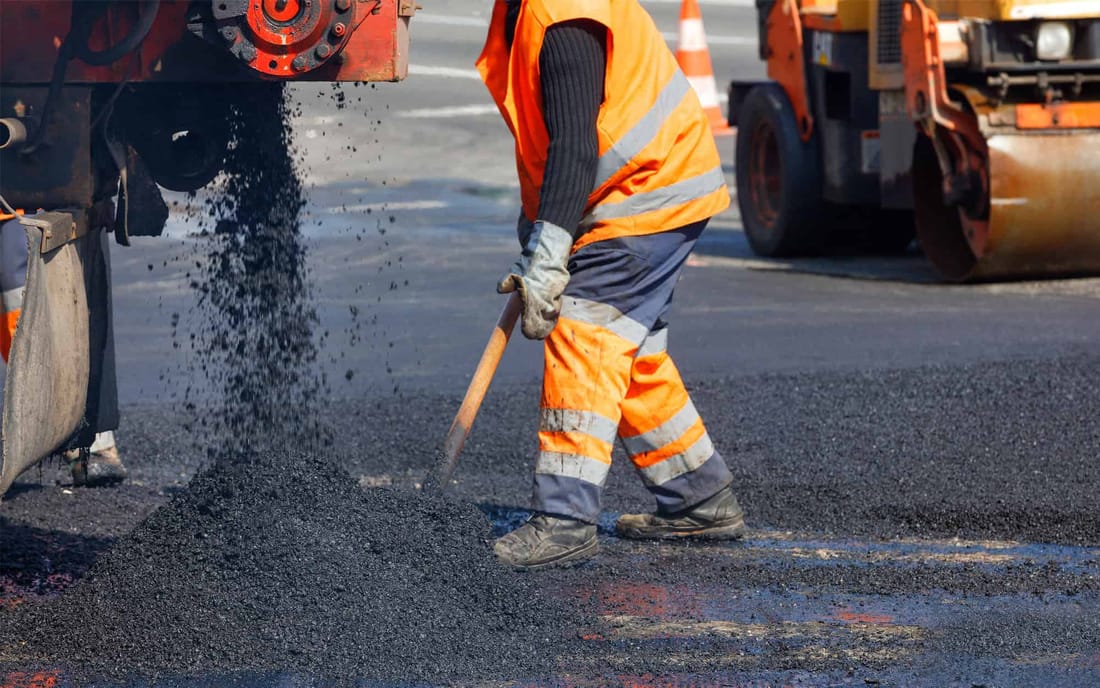
Industrial asphalt paving in New York City has to stand up to weight, turning forklifts, loading docks, fuel spills, and constant delivery traffic. At Precision Asphalt New York, we build pavements for that exact reality, not just a nice-looking blacktop. If you run a warehouse in Long Island City, a distribution center by JFK, or a food processing plant in the Bronx, your pavement has to perform under concentrated loads and tight maneuvering, or you end up with rutting, broken edges, and safety issues.
Our first step is always a site visit. We walk the yard, loading areas, and entrances with you and look at how trucks and equipment actually move. We note where trailers sit, where pallets get dropped, and where water already ponds. In older New York properties, especially converted industrial buildings, the subgrade and drainage were never designed for today’s traffic. We factor that into the pavement design from the start, so you are not paying to resurface an underlying problem.
From there we design the pavement section for your specific use. Industrial asphalt paving is not one thickness fits all. A light service area for vans might work with a different section than an area where 53 foot trailers are backing in all day. We combine your traffic profile, soil conditions, and drainage with local NYC requirements so you get a pavement that matches the way your facility actually runs.
How Heavy-Duty Asphalt Pavements Are Built
For a heavy-duty installation, most of the work is below the surface. Precision Asphalt New York begins by removing existing failed asphalt or concrete, typically 3 to 12 inches depending on the existing section and what we find beneath it. We proof-roll the subgrade with a loaded truck or roller so we can see soft spots immediately. Any pumping areas or flexing under the truck get undercut and rebuilt, otherwise your new asphalt will mirror those failures in a season or two.
Once the subgrade is firm and graded for proper slope, we build the aggregate base. On true industrial loading areas in New York, this is commonly 6 to 12 inches of compacted crushed stone, installed in multiple lifts and compacted with vibratory rollers. This base is what actually carries your loads. We pay close attention to transitions at dock aprons and dumpster pads, where edge failures usually start if the base does not extend far enough.
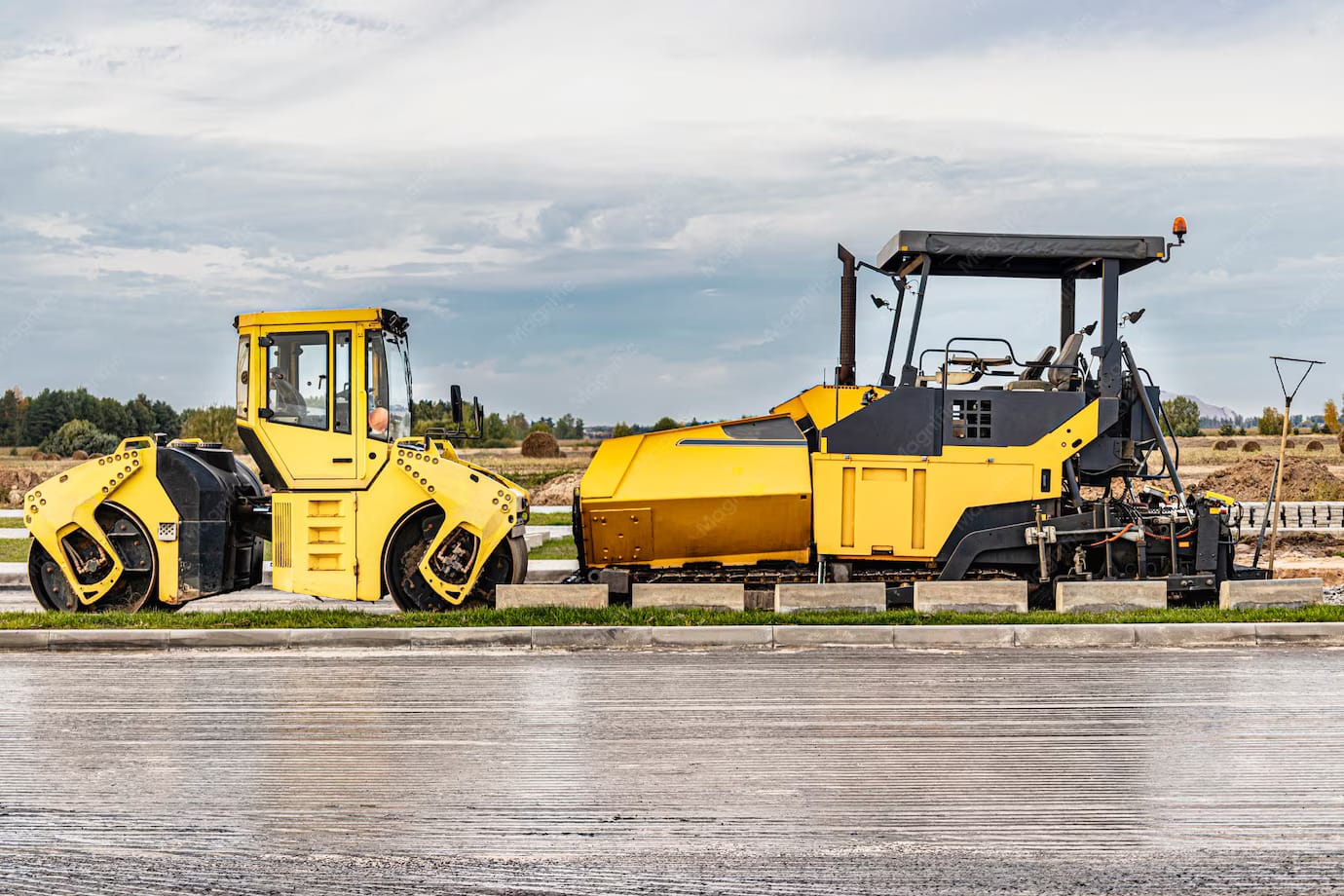
The asphalt itself goes in multiple layers. A typical heavy-duty section might use a thicker base course with larger aggregate for strength, then an intermediate binder course, then a tighter, smoother surface mix. Every lift is compacted while it is in the proper temperature range using steel drum and pneumatic rollers, so you get density and long-term performance. We stage the work, often over nights or weekends, so that critical access lanes or docks stay usable as much as possible in a 24 hour city like New York.
Material Options and Design Choices for Heavy Loads
Industrial asphalt paving gives you flexibility to tune the design to your facility and budget. Precision Asphalt New York will walk you through the options so you understand where your money is best spent.
For high stress areas like loading docks, entrance aprons, and trash compactor pads, we often recommend a reinforced design. That can mean a thicker asphalt section, an upgraded stone base, or a combination. In some New York yards with constant static loads from container storage, we may suggest an asphalt surface over a stabilized base to limit rutting. In high oil or fuel exposure zones, we can adjust the surface mix and recommend sealers or small concrete insets where it makes sense.
We also look at phasing and future changes. If you are planning to add a second shift or bring in heavier equipment next year, we can design your industrial asphalt paving so it can be thickened in key areas later without tearing everything out. For facilities in flood-prone parts of Brooklyn or along the Harlem River, we pay particular attention to edge drainage, inlet locations, and raising critical pavements above frequent standing water.
Striping and layout are part of the design too. Tight New York lots benefit from smart circulation patterns that reduce sharp turning in the same spot. By adjusting truck paths or setting up swing space, we can reduce the stress on your pavement and extend its life without adding structural cost.
Costs, Common Problems, and How We Prevent Them
On industrial asphalt paving projects, cost is driven by three main factors: total area, pavement thickness (asphalt and base), and site complexity. A wide open distribution yard in Staten Island with easy truck access will be more economical per square foot than a cramped Manhattan rear lot that requires handwork and small machines. Excavation depth and export of spoils can be a big line item in New York, especially if we uncover unsuitable material that must be hauled to approved facilities.
Common problems on older NYC industrial pavements include rutting in wheel paths, broken edges where trucks drop off the side, potholes at trench cuts, and chronic puddles. Precision Asphalt New York addresses these by tackling the root cause. For rutting, we increase the thickness and stiffen the base course. For failing edges, we widen and reinforce the structure beyond the expected wheel path, rather than just patching the surface. For recurring potholes at trench lines, we saw cut, excavate, rebuild the base, and tie the new asphalt into the existing with proper joints.
Drainage failures are another big issue, especially around old catch basins and in yards that have been patched over decades. Before we pave, we shoot grades, check and reset or replace basins, and adjust slopes so water actually moves to a defined outlet. A heavy-duty pavement that holds water will deteriorate quickly in freeze-thaw cycles, even in relatively mild years. Spending a little more on drainage and base is usually cheaper than resurfacing every few winters.
We are transparent about cost drivers during our proposal. If a thicker base under your primary dock lane will add ten percent to the job but is likely to buy you several more years of service, we will show you that math clearly so you can make an informed decision.
What New York Facility Managers Should Know Before Hiring
Industrial asphalt paving is a specialized service, and in New York you should expect your contractor to talk in specifics, not just promise a thick blacktop. When you speak with Precision Asphalt New York, we will ask about your truck counts, axle loads if available, equipment types, and where the heaviest activity occurs. Any contractor who does not ask those questions is guessing at your pavement design.
Ask to see a proposed section in writing. It should outline subgrade preparation, base depth and type, each asphalt lift and mix type, and compaction methods. For example, a document that simply says "3 inches of asphalt" is not sufficient for a heavy-duty application. You want to see details like "8 inches NYSDOT Type 2 subbase, 3 inches binder, 2 inches top course," or a similar clearly defined structure. Also ask how they will handle your operations during the work. In NYC, coordinating with building management, neighboring businesses, and delivery schedules is often as important as the paving itself.
Timing matters too. Many industrial clients schedule this work during holiday shutdowns, changeovers, or overnight windows. We routinely plan phases so that at least one access route or dock bank remains available. Permits, trucking routes, and noise restrictions vary by borough, and an experienced local contractor will already know what is needed for your address.
Finally, talk about long-term care before the job starts. We will outline realistic maintenance such as periodic crack sealing, spot patching in extreme wear zones, and when it might make sense to overlay rather than rebuild. With a properly designed section and basic upkeep, a heavy-duty industrial asphalt pavement in New York can serve reliably for many years, even under demanding conditions.