Home › Asphalt Sealcoating & Crack Filling
Protect your driveway investment in New York, NY with regular asphalt sealcoating and crack filling. We clean the surface, seal existing cracks, and apply a high quality sealer for a rich black finish. Proper maintenance shields your driveway from water, salt, and UV damage, reduces new cracks, and keeps your property looking sharp year round.
Precision Asphalt New York provides professional asphalt sealcoating throughout New York, NY, New York and the surrounding area. Our licensed, insured crew delivers safe, clean, on-time work with a free estimate before anything begins. Call (332) 264-5090 or request your free quote.
Asphalt sealcoating for New York City streets, driveways, and lots
In New York City, asphalt takes a beating from traffic, winter freeze-thaw cycles, and constant utility work. Precision Asphalt New York uses asphalt sealcoating and crack filling to slow that damage down and keep your surface looking clean and professional.
Sealcoating is a protective liquid layer that we apply over existing asphalt. It helps block water, salt, oil, and UV rays from soaking into the pavement. Crack filling targets existing cracks so water cannot get under your asphalt and break it apart when it freezes. Together, these two services extend the life of your pavement and delay costly full resurfacing.
Most of our New York, NY customers call us for sealcoating on apartment building driveways, small commercial parking lots, private access roads, and loading areas behind stores. We also service co-op and condo properties that need a clean and safe look for residents and visitors. If you are in Manhattan, you also have tight access, limited parking windows, and neighbors everywhere. We plan our work so we can get in, get out, and keep disruption to a minimum.
We do not push sealcoating where it is not appropriate. If your pavement is badly alligatored, soft, or losing its base, another coat of sealer will not fix it. In those cases we will tell you honestly that you are better off with patching or resurfacing. Sealcoating works best on sound asphalt that is starting to dry out, fade, or show small to medium cracks.
How our sealcoating & crack filling process actually works
Precision Asphalt New York follows a repeatable process on every asphalt sealcoating job so you know what to expect and why it matters.
1. Site walk-through and measurements. We inspect your pavement in person, measure the square footage, and mark problem areas. In New York, NY this often includes utility cuts that were patched roughly, settled trenches along the curb, and cracked areas near building loading docks where trucks turn sharply.
2. Cleaning and prep. We use high powered blowers, brooms, and wire brushes to remove dirt, leaves, grit, and loose debris. In tight Manhattan courtyards we sometimes use portable vacuums where blowers are not practical. If there are oil spots, we apply an oil spot primer so the sealer will actually bond instead of peeling off.
3. Crack routing (when needed). For larger working cracks, usually 1/4 inch and wider, we may route or widen them slightly with a crack router so the hot rubber can get deep into the void. This is not needed on every job, but on higher traffic areas like small commercial lots it helps the repair last.
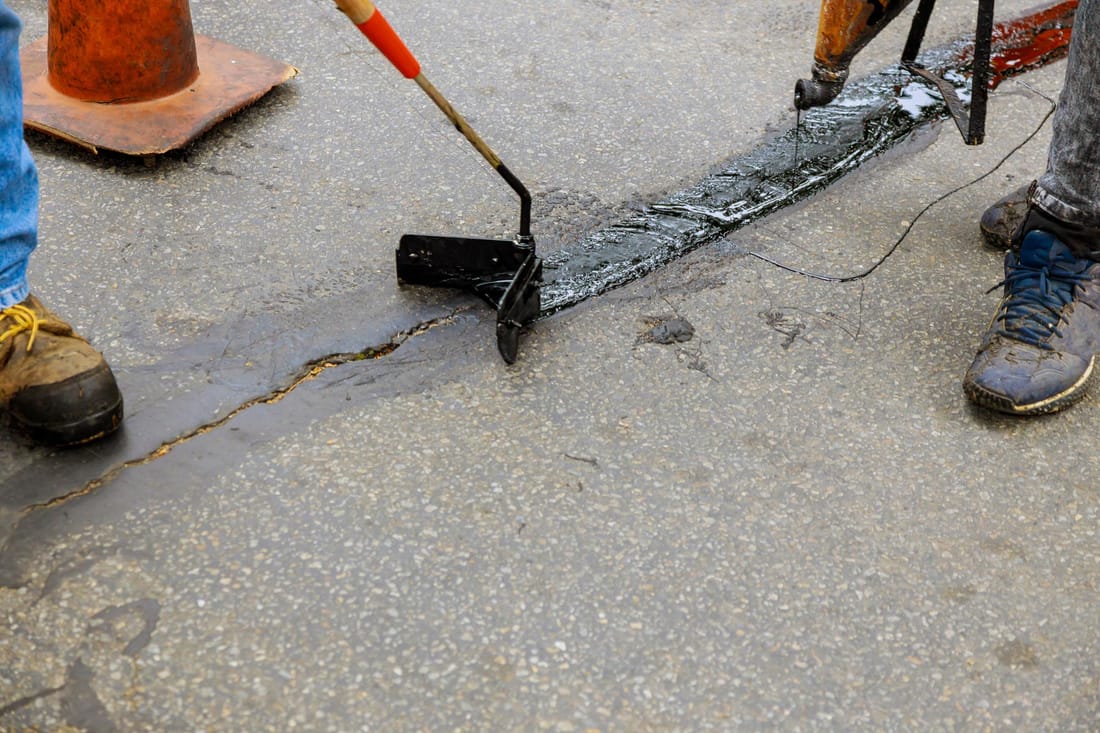
4. Hot rubber crack filling. We heat rubberized crack sealant in a kettle, usually a hot pour rubber that stays flexible in both winter and summer temperatures. The material is applied directly into the crack and slightly overfilled, then squeegeed or banded to create a tight seal. This prevents water from getting under the pavement where it can freeze and lift the surface.
5. Edge and detail sealing. Before we spray the main coat, we cut in along garage doors, curbs, drainage grates, and building entrances with brushes or squeegees. This gives you a clean line and keeps sealer off brick, concrete, and pavers.
6. Sealcoat application. For most larger areas we use a spray system, which gives an even, consistent coat. On smaller areas and tight city spots we may use squeegees. Depending on your pavement and traffic, we typically apply one heavy coat or two thinner coats. On commercial drives and taxi or rideshare waiting areas, two coats usually pay off with longer life.
7. Drying and opening to traffic. In normal New York weather, we recommend 24 hours of cure time before vehicle traffic and at least 4 to 6 hours before foot traffic. On shaded streets or during high humidity, we may extend that. We help you schedule around trash pickup, deliveries, and busy hours so you are not stuck blocking access at the wrong time.
Materials we use and options you can choose
Not all sealers are the same, and New York regulations and site conditions shape what we use. Precision Asphalt New York works primarily with commercial grade asphalt emulsion sealer. It is low odor, suitable for city environments, and holds up well to typical Manhattan car and light truck traffic when properly mixed and applied.
We add sand and polymer additives when needed instead of using a one size fits all mix. Sand in the sealer improves traction in wet and icy conditions and helps reduce scuffing in tight turn areas like parking garage entrances. Additives can speed up drying, improve flexibility, or increase resistance to chemicals like deicing salts and leaked motor oil.
For crack filling, we use hot pour rubberized crack sealants designed for Northeastern freeze-thaw cycles. These products stay flexible, so they expand and contract with the pavement instead of cracking apart in the first cold snap. On hairline cracks that are too small for hot rubber, we may use a pourable cold crack filler combined with sealcoat, but we will explain where that is appropriate so expectations are clear.
You can also choose how “jet black” you want the final finish to be. Fresh sealcoat will darken your pavement, but the exact look depends on how oxidized your asphalt is and how many coats we apply. Some New York building owners prefer a deep black look with new striping for curb appeal, especially on rental properties and retail lots. Others prefer a more natural, non shiny finish for alleys or service drives where appearance is less important. We will show you sample photos based on surfaces similar to yours so you know what to expect.
If you have special conditions, such as heavy truck traffic behind a supermarket, bus or shuttle loading areas, or constant rideshare pickup at a residential building, we can tailor the material selection and application thickness to match that use. This approach helps you avoid paying for sealer that is overkill in light use areas while still protecting the spots that take the most abuse.
What affects cost for asphalt sealcoating in New York, NY
Most customers want to know why one estimate is higher or lower than another. Precision Asphalt New York explains our pricing so you can compare bids on equal terms instead of just picking the lowest number.
The main factor is square footage. Larger areas usually get a better per square foot rate because we can work more efficiently with our equipment. Very small Manhattan courtyards, tight alleys, and single car driveways may cost more per square foot because of setup time and limited access.
Condition of the asphalt is the next driver. A relatively smooth, lightly cracked lot is faster and cheaper to prep than a surface with heavy cracking, oil damage from constant deliveries, or settled patches around old utility trenches. More time cleaning, routing, filling, and spot priming means more labor and material.
Access and logistics also make a difference in New York, NY. If we need to coordinate with building management, security, doormen, and neighboring businesses, or schedule around night deliveries and garbage pickup, that planning is built into the project. Working in underground or multi level garages may require special ventilation, smaller equipment, and more time to move hoses and materials.
Number of coats is another cost factor. A single coat may be fine for low traffic residential drives that do not see heavy turning. Busy commercial lots near avenues or around schools may justify two coats and more crack filling. You pay more up front, but you usually gain extra years before you need major repairs.
We also consider striping. Some clients ask us to re-stripe parking spaces, accessible spots, loading zones, and directional arrows after the sealer cures. The more detailed the layout, especially in tight Manhattan lots, the more time and material it involves. If you provide your building plan or existing layout, we can price that accurately.
Our written proposals spell out what is included: surface prep, crack filling type, number of coats, and any striping. That way you can see if one contractor is skipping crack sealing or using a thin coat of sealer just to quote a lower price. We encourage you to ask questions and we will walk the site with you if anything needs clarification.
What New York property owners should know before scheduling
Timing is critical for asphalt sealcoating and crack filling in New York. Temperatures should be warm enough and surfaces dry, which usually means late spring through early fall is best. We can work earlier or later in the season during warm stretches, but we will not apply sealer when it is too cold or damp just to force a job in. Poor conditions lead to peeling and premature wear.
You should plan for temporary access changes. For residential driveways in Manhattan and nearby boroughs, that might mean arranging alternate parking or street parking for a day. For commercial lots, consider your slowest business hours or a weekend. Some properties split the work into sections so customers and residents always have a way in and out while we sealcoat the other half.
If your asphalt has drainage issues, like standing water near the building or puddles that never dry, tell us up front. Sealcoating will not fix low spots. In some cases we can correct small bird baths with patching before we seal. For bigger drainage issues, we will discuss options like milling high spots, installing small drains, or more extensive repairs before applying any sealer.
New York, NY winter conditions are tough on pavement. Rock salt, freeze-thaw, and plows all shorten asphalt life. Regular crack sealing is one of the best defenses against winter damage, especially before the first deep freeze. Many of our customers schedule crack filling and sealcoating on a 2 to 3 year cycle, with spot crack repair in between as needed.
Before hiring any contractor, ask about their insurance, material data sheets, and how long they have been working in city environments. Work in New York is not the same as work in wide open suburban lots. Precision Asphalt New York is set up for tight spaces, strict building rules, and coordination with supers and management companies. Our crews are trained to protect adjacent surfaces, control overspray, and leave the site clean.
If you want a straightforward evaluation of whether asphalt sealcoating and crack filling makes sense for your property right now, we will inspect the surface and tell you honestly. Sometimes the right move is to seal now and extend the life. Other times it is smarter to invest in patching or resurfacing first, then sealcoat. Our goal is pavement that holds up in real New York conditions, not just a quick dark coating that looks good for a few weeks.