Home › Asphalt Striping and Pavement Markings
Our asphalt striping and pavement markings in New York, NY keep your parking areas organized, safe, and compliant. We layout and paint parking lines, arrows, fire lanes, and ADA accessible spaces according to current standards. Crisp, bright markings improve traffic flow, maximize capacity, and project a professional image for your business or facility.
Precision Asphalt New York provides professional asphalt striping throughout New York, NY, New York and the surrounding area. Our licensed, insured crew delivers safe, clean, on-time work with a free estimate before anything begins. Call (332) 264-5090 or request your free quote.
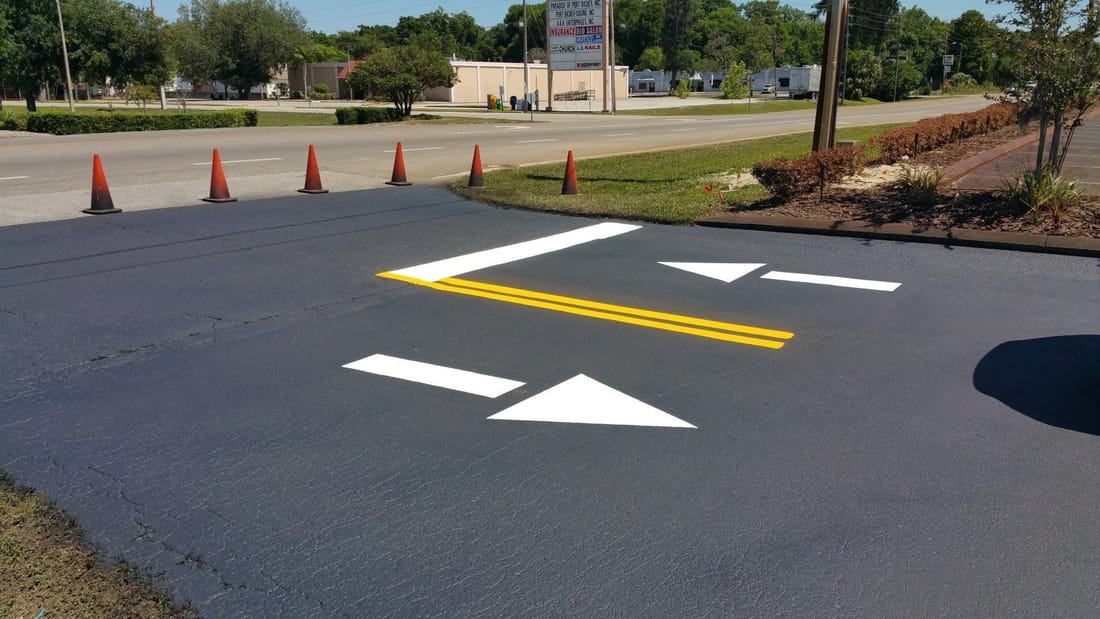
Clear, compliant striping for New York properties
In New York City, clear pavement markings are not just about looks. They control how people move through tight spaces, prevent fender benders, and help you avoid tickets. Precision Asphalt New York focuses on asphalt striping that fits the way New Yorkers actually use their parking lots and drive lanes, from busy mixed‑use buildings to small private lots behind brownstones.
We start every asphalt striping project by walking the site with you. We look at how cars currently enter and exit, where delivery trucks load, where pedestrians cut across, and where congestion or near‑misses tend to happen. For properties in Manhattan, Queens, Brooklyn, or the Bronx, this often means rethinking outdated layouts that were striped before rideshare, food delivery, and e‑commerce traffic became so heavy.
Our goal is a layout that is easy to understand at a glance, uses every square foot efficiently, and respects New York City Fire Department access, local zoning rules, and ADA requirements. Good striping, done thoughtfully, makes your property feel calmer and more organized immediately.
How asphalt striping is actually done, step by step
Effective asphalt striping starts with surface preparation. First, our crew cleans the pavement with high‑powered blowers and stiff brooms to remove dust, grit, and loose debris that can keep the paint from bonding. In oily areas, such as near loading docks or where cars tend to leak, we treat spots with a degreaser and rinse as needed so the markings last.
Next, we measure and snap chalk lines, or use laser guides on larger lots, to lay out stalls, drive lanes, arrows, and crosswalks. In cramped New York lots where every inch matters, we double‑check stall width and drive aisle width with tape measures before a single line is painted. If we are restriping over a faded layout, we confirm that the existing pattern still makes sense and adjust before we repaint.
For the striping itself, we use professional airless striping machines that deliver consistent line width and paint thickness. We typically apply NY‑grade traffic paint with either water‑based acrylic or solvent‑based formulations, depending on your site, budget, and scheduling needs. On busy commercial properties where shut‑downs must be short, we often use fast‑dry traffic paint that can be driven on in less than an hour in normal city temperatures.
We finish by inspecting line sharpness, coverage, and alignment, then remove any layout chalk and set up cones or tape until the markings are ready for traffic. On many New York properties we schedule work overnight or in early morning windows so your tenants, customers, or staff are not disrupted.
Layout options that work in tight New York spaces
Because so many New York City properties were built long before modern parking standards, a one‑size‑fits‑all layout rarely works. Precision Asphalt New York routinely helps owners and managers reconfigure lots to add stalls or improve flow without major construction.
We walk through options like 90‑degree parking, angled stalls at 45 or 60 degrees, compact‑car sections, and dedicated loading zones. For example, a small lot near a restaurant or medical office might benefit from a few short‑term spaces near the entrance, clearly labeled and painted in a different color. Residential buildings often need clearly marked visitor spaces and no‑parking areas for trash pickup.
We also plan walkways and crosswalks to protect pedestrians. In New York this often means high‑visibility ladder‑style crosswalks that link entrances to sidewalks or transit stops. For bike‑heavy neighborhoods, we can mark bicycle parking areas or shared lanes within private property. All layout choices are explained in plain language before we paint so you know exactly how the finished lot will function day to day.
Pavement marking materials, colors, and visibility choices
Different properties in New York have different marking needs. We work with a range of materials and color schemes so your striping is both durable and easy to understand.
Standard parking stall lines and traffic arrows are typically white. Fire lanes, loading zones, and certain no‑parking areas are often striped in yellow or red, depending on your specific requirements and any posted regulations or building rules. We can add reflective glass beads to paint in locations where visibility at night is critical, such as busy alleys, steep ramps, and loading docks.
For ADA compliance, accessible spaces require blue symbols and markings plus properly striped access aisles. We use high‑build stencils for wheelchair symbols and clear text so enforcement and visitors have no doubt where accessible parking is located. If your property has electric vehicle charging, we can stripe designated EV stalls using green fields with contrasting symbols so they are not casually occupied by non‑EVs.
In snow‑prone months, bright and slightly wider lines can help your snow vendor see boundaries when plowing. We can recommend line thickness and colors that hold up better against salt and repeated plowing, which is a major concern for New York property managers.
Costs, scheduling, and what affects your asphalt striping price
Asphalt striping pricing in New York depends on several practical factors. The size of your lot, the number of individual markings (stalls, arrows, numbers, symbols), whether we are laying out a new design or simply restriping, and the type of paint or specialty markings you choose all affect the final cost.
New design work, especially when we are changing traffic flow or maximizing stall count, involves more layout time and measurements, so it costs more than a straight restripe. Complex features like custom logos, multi‑color loading zones, or extensive ADA areas add to the price because of extra stenciling and masking.
Access and timing also matter in New York. Lots that require night work, phased striping to keep portions open, or coordination with security or building staff may have a higher project cost due to added labor and mobilization. On the other hand, combining striping with sealcoating or asphalt repair can lower your overall cost per square foot because we complete multiple services in a single mobilization.
We provide written estimates that break down major line items so you can see what drives the number of hours and materials. For many small and mid‑size lots, we can give a ballpark estimate using measurements from a site visit or up‑to‑date aerial imagery, then confirm on site before work begins.
Common striping problems in New York and how we prevent them
City conditions are tough on pavement markings. At Precision Asphalt New York, we design our striping work around the issues we see most often on local properties.
One common problem is premature fading, especially in lots that get heavy sunlight or aggressive snow plowing. We counter this by adjusting paint type and application rate to suit the site. In some high‑wear areas, we may recommend a slightly thicker application or more durable paint to extend the life of the markings.
Another frequent issue is confusing or overlapping lines from multiple generations of striping. In these cases, simply painting over old markings is not enough. We can black out obsolete lines with asphalt‑colored paint or sealcoat, then stripe the new configuration so drivers are not distracted by ghost lines.
Drainage and surface defects also matter. If your lot has large puddles after rain, paint will not cure properly and will flake off early. We inspect for low spots and cracks before striping and may suggest patching or localized repair so your new markings adhere as intended. In underground garages or covered areas, we pay attention to ventilation and moisture to ensure the paint cures safely and quickly.
Finally, we clearly communicate drying and reopening times, then set up cones and signage so drivers do not track through wet paint. This is critical in New York, where impatient traffic can ruin fresh striping in minutes if an area is not properly controlled.
What New York property owners should check before hiring a striper
Choosing the right company for asphalt striping in New York is about more than getting the lowest price per line. You are trusting someone to control traffic patterns, safety, compliance, and the first impression of your property.
Ask whether the contractor has recent experience with properties similar to yours, such as mixed‑use buildings, retail plazas, or co‑op and condo lots. Request examples of layouts they have designed, not just photos of straight lines on an empty lot. A good striping plan reflects real‑world use, including ride share pick‑up zones, delivery van staging, and trash collection paths.
Confirm that they understand ADA and New York City Fire Department access requirements, and that they will clearly mark fire lanes, hydrant clearances, and accessible routes. Insurance and references should be easy to provide. It is also wise to ask how they will phase the work so your property can keep functioning while striping is underway.
Precision Asphalt New York offers on‑site walkthroughs where we mark proposed changes with temporary chalk or tape so you can visualize the layout before paint goes down. We coordinate with your building staff or property manager to choose work windows that fit your operations. When we leave, you have a clearly marked, compliant, and easy‑to‑use pavement layout that fits the way New Yorkers actually move through your space.